
|
|
|
|
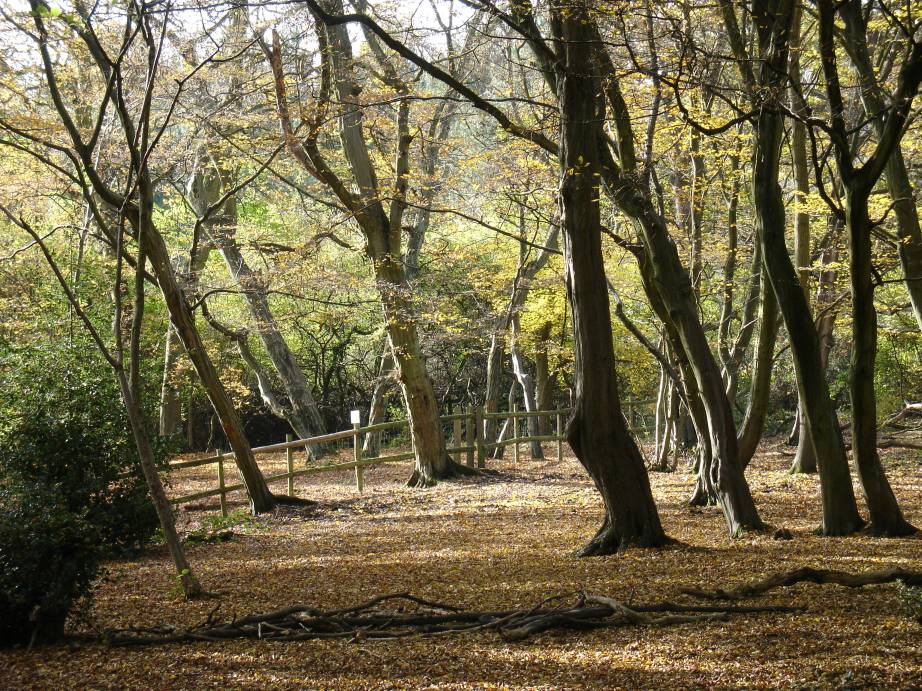
Bentley
Priory Nature Reserve is the best known of the sites we maintain, lying
north
of the Uxbridge Road and northwest of central Stanmore. The reserve is
a
patchwork of woods and open grassland within which lie two bodies of
water,
Summerhouse Lake (named for Queen Adelaide’s lakeside gazebo)
and Boot Pond.
Heriot’s Wood is ancient, that is, it has certainly been a
wood since 1600 and
probably ever since the last glaciers retreated. Many of the trees here
are
hornbeam, a species that is characteristic of ancient woods. To the
west of
Summerhouse Lake stands the “Master”, a mighty oak
at least 500 years old. The
open grassland is “unimproved”, meaning that it has
never been treated with
fertilizer and hence is rich in wild flowers. It has been designated a
site of
special scientific interest (S.S.S.I.) by Natural England. Many
interesting and
relatively uncommon birds can be seen or heard including buzzard,
spotted
flycatcher and bullfinch. In summer warblers such as whitethroat,
garden
warbler, blackcap, chiffchaff and willow warbler breed in the scrubland
in
Spring Meadow. In winter, large numbers of redpoll, siskin, redwing,
fieldfare
and goldcrest arrive from mainland Europe and Scandinavia.
Members of
the warden team take time getting to know the site and then take
responsibility
for its management and for interaction with the public. Collectively
the warden
team, together with the Biodiversity Officer and the Public Realm
manager from
Harrow Council and Natural England and other external bodies, create
the
strategy for managing Bentley Priory Nature Reserve. Management has two
strands,
maintenance of the present ecological structure (for example, by mowing
the
grassland space to prevent succession to scrub) and carefully planned
improvements (for example, the creation of new ponds).
Specific roles and responsibilities include: